ARTIKEL NO.155 | Cara Menguji Geseran Kekal Tingkap Tanpa Memasangnya pada Tingkap
ARTICLE NO.155 | How to Test Window Stay Friction Without Installing It on the Window
A window friction stay is designed to be tested after installation, with the sash attached and the full system operating as it would in daily use. Yet there are many situations where testing before installation is valuable. A contractor receiving a bulk delivery needs to verify that the stays match the specification before committing to installation. A maintenance technician troubleshooting an intermittent problem wants to isolate whether the stay or the sash is at fault. A quality inspector requires a quick, repeatable method to check multiple units. Testing a friction stay without the window is entirely possible, and with the right technique, it provides reliable data about the stay's condition and performance.
What You Can Realistically Test Off the Window
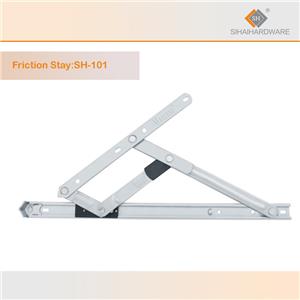
A window friction stay removed from its window cannot replicate the full loading conditions of an installed sash. The weight of the glass, the leverage of the sash width, and the wind loads that act on the open window are absent. What can be tested, however, is the fundamental mechanical function that determines whether the stay is worth installing. The sliding shoe must move smoothly along the entire track without binding, catching, or requiring excessive force. The friction pad must generate consistent resistance through the full travel range. The riveted joints must show no visible play or looseness. The track must be straight and free of deformation. These are the characteristics that separate a functional stay from one that will cause problems after installation, and all of them can be evaluated with the stay held in your hands.
The Manual Slide Test
The simplest and most informative off-window test for a window friction stay requires nothing more than your hands. Hold the track firmly in one hand, pressing it against a flat surface such as a workbench to keep it straight. With your other hand, grip the sash bracket or the connecting arm and slide the shoe along the track through its full range of motion. A healthy stay moves with smooth, uniform resistance from one end of the track to the other. There should be no points where the shoe suddenly binds or releases. No gritty sensation should transmit through your fingers. The resistance should feel consistent—not necessarily light, but predictable. If the shoe catches at a specific position, the track may be bent or contaminated at that point. If the resistance varies significantly through the stroke, the friction pad may be unevenly worn. If the shoe moves with almost no resistance, the pad is worn out or the internal spring has failed. This test takes ten seconds and reveals more about the stay's condition than any visual inspection.
Checking for Track Deformation
Track straightness is critical to window friction stay performance, and it is easily checked off the window. Place the track on a known flat surface—a machinist's surface plate is ideal, but a sheet of glass or a granite kitchen countertop works well for field use. Press down gently on one end of the track and observe the gap between the track and the flat surface along its length. Any gap exceeding approximately 0.3 millimetres—roughly the thickness of three sheets of paper—indicates a bend or twist that will interfere with shoe travel. Check both the back face of the track that mounts against the frame and the running surface where the shoe slides. A track that is bent in the mounting plane may be straightened or replaced before installation, saving the labour of installing a defective component and then removing it. A track that is twisted along its length is generally not recoverable and should be rejected. This check is particularly valuable for stays that have been in storage or transit, where accidental impact or stacking damage may have occurred.
Rivet Integrity Inspection
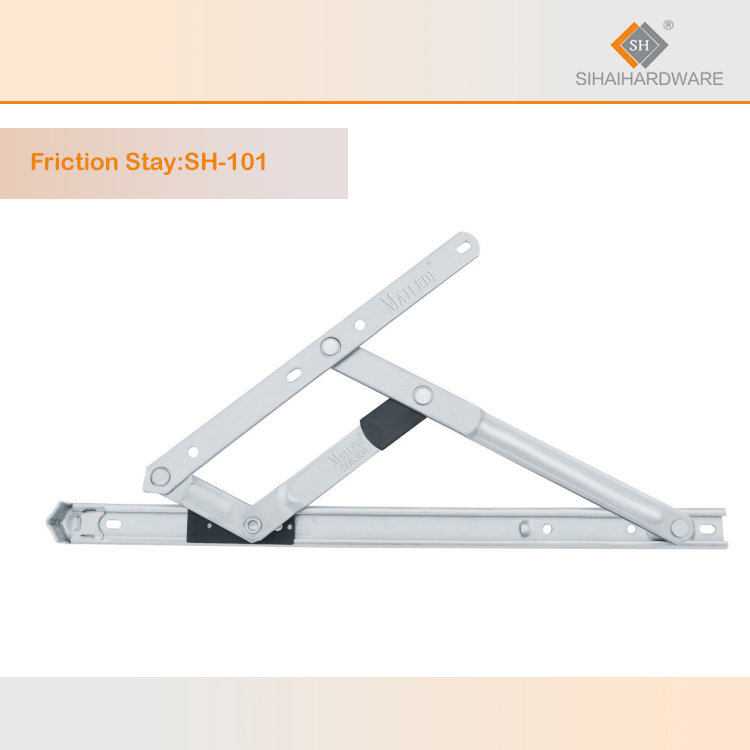
The rivets of a window friction stay are its most failure-prone components, and they can be thoroughly inspected off the window. Grasp the connecting arm near each rivet and attempt to move it perpendicular to its normal plane of rotation. Any perceptible movement—a click, a shift, a rocking motion—indicates that the rivet has lost its clamping force. A properly set rivet holds the joined layers in rigid contact with no relative movement possible. Next, examine each rivet head and tail under good light. The rivet should sit flush against the metal surface with no visible gap. The tail should be symmetrical and free of radial cracks. Rust staining around a rivet head indicates crevice corrosion developing within the joint. A rivet that shows any of these signs will continue to degrade after installation and will cause the stay to develop play prematurely. Identifying rivet problems before installation prevents the waste of installing a stay that will need replacement within months.
Friction Pad Condition Assessment
The friction pad inside the sliding shoe of a window friction stay cannot be seen without disassembly, but its condition can be inferred from the shoe's behaviour. With the track held firmly, move the shoe to the midpoint of its travel. Apply gentle lateral pressure to the sash bracket, trying to rock the shoe within the track. A shoe with a healthy friction pad will resist this rocking motion because the pad is pressing firmly against the track walls. If the shoe rocks or tilts noticeably, the pad is either worn thin or the internal spring has weakened. Another indicator is the sound the stay makes during the slide test. A healthy stay produces a quiet, consistent sound—a smooth hiss or a very faint hum as the pad moves over the track. A stay that squeaks, chatters, or produces intermittent scraping sounds has a damaged or contaminated pad. These acoustic signatures are reliable diagnostic tools once you have learned to recognise them.
Comparative Testing for Batch Quality
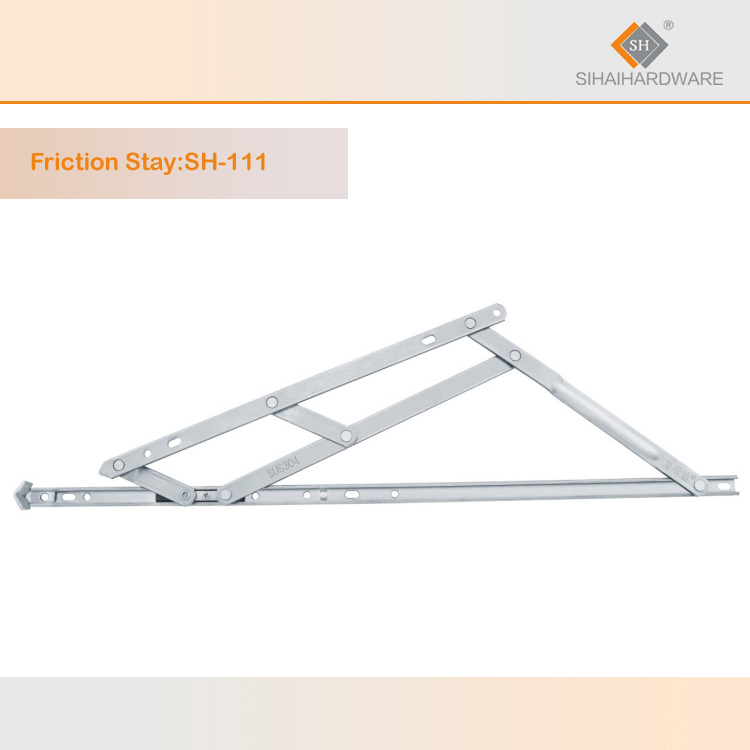
When multiple window friction stay units of the same specification need to be checked, comparative testing quickly identifies outliers. Line up the stays on a work surface and perform the manual slide test on each one in sequence. The resistance should feel similar across all units. A stay that feels significantly looser or tighter than its neighbours has a manufacturing variance that warrants rejection. The track straightness check can be performed rapidly by placing each track on the same flat reference surface and attempting to slide a feeler gauge under the track at its midpoint. Any track that fails the same gap criterion as its batch-mates has a quality deviation. This comparative approach does not require calibrated instruments or absolute measurements. It relies on the consistency of a well-manufactured batch to make deviations immediately apparent. For contractors installing large numbers of identical windows, this ten-minute check on a sample of stays from each delivery can prevent the costly discovery of defective hardware after dozens of units have been installed.
Limitations of Off-Window Testing
Off-window testing of a window friction stay cannot replicate the effect of the sash mass on the mechanism. The holding force of a stay—its ability to keep the window open against wind—depends on the friction pad being pressed against the track with a force that is partly generated by the weight of the sash acting through the linkage geometry. Without the sash attached, this load-dependent component of the friction is absent. A stay that passes all off-window tests with flying colours may still prove inadequate when installed on a heavy sash in a windy location. Off-window testing should therefore be understood as a screening process. It reliably identifies stays that are definitely defective—those with binding shoes, loose rivets, bent tracks, or worn pads. It cannot guarantee that a stay that passes these tests will be adequate for a specific sash and exposure condition. That determination requires either on-window testing after installation or reference to the manufacturer's certified test data for the specific stay model and sash configuration.
Conclusion
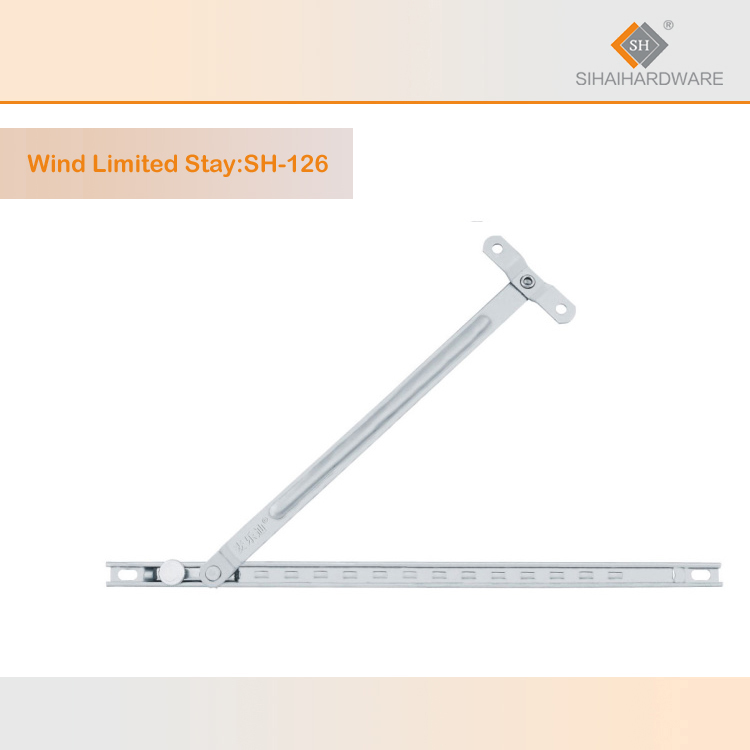
Testing a window friction stay without installing it on the window is not only possible but highly practical. The manual slide test, track straightness check, rivet inspection, and friction pad assessment together provide a comprehensive evaluation of the stay's mechanical integrity. These tests require no specialised equipment—a flat surface, good lighting, and attentive hands are sufficient. They take less than two minutes per stay. They catch the defects that would otherwise manifest as callbacks, warranty claims, and frustrated building occupants. While off-window testing cannot replicate the full installed loading conditions, it serves as an effective screening process that prevents defective hardware from ever reaching the installation stage. A stay that passes these tests is not guaranteed to perform perfectly in every installation, but a stay that fails them is guaranteed to cause problems. In hardware quality assurance, identifying the certain failures before they become installed problems is the highest-value activity any testing programme can perform.